Halal gets treated as a label — a stamp applied at the end of a process nobody sees. On our farm it works the other way round: it decides how the animals live months before anyone thinks about the counter.
It starts on the pasture
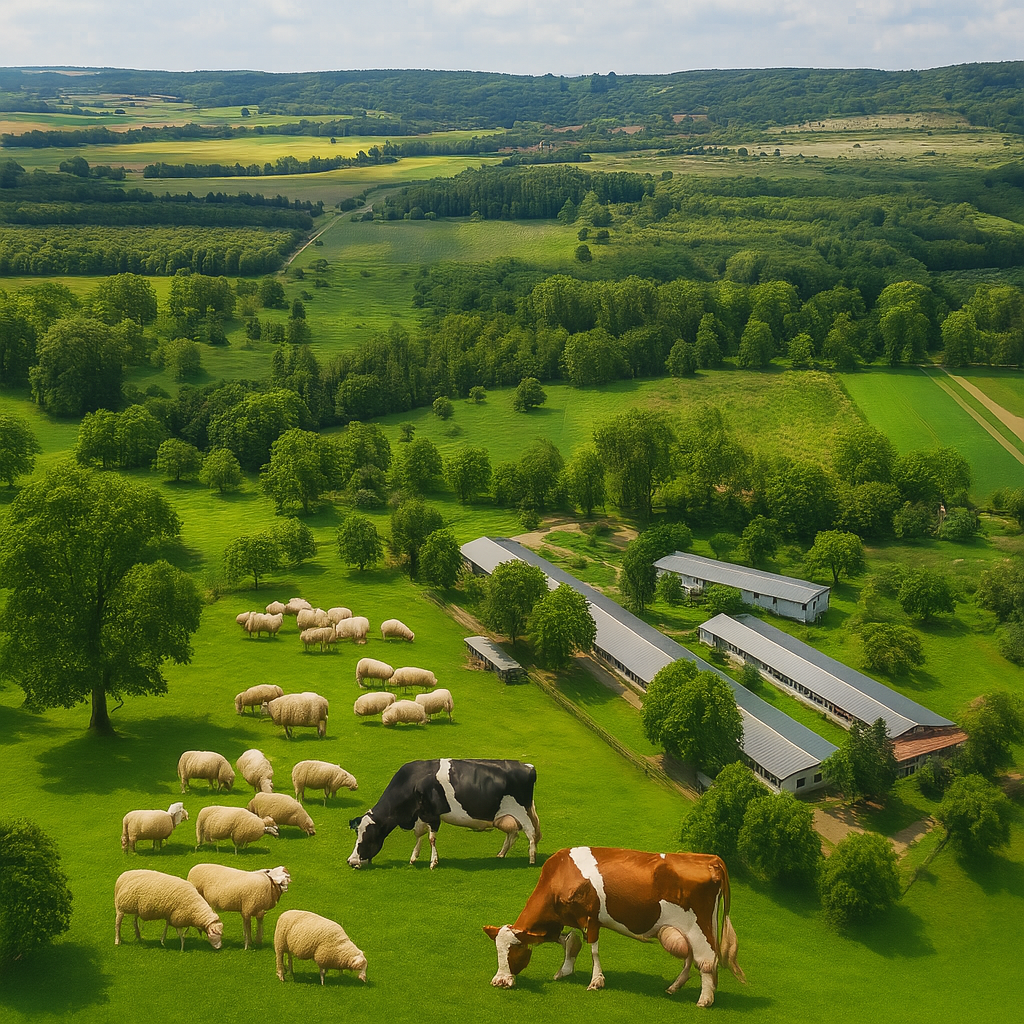
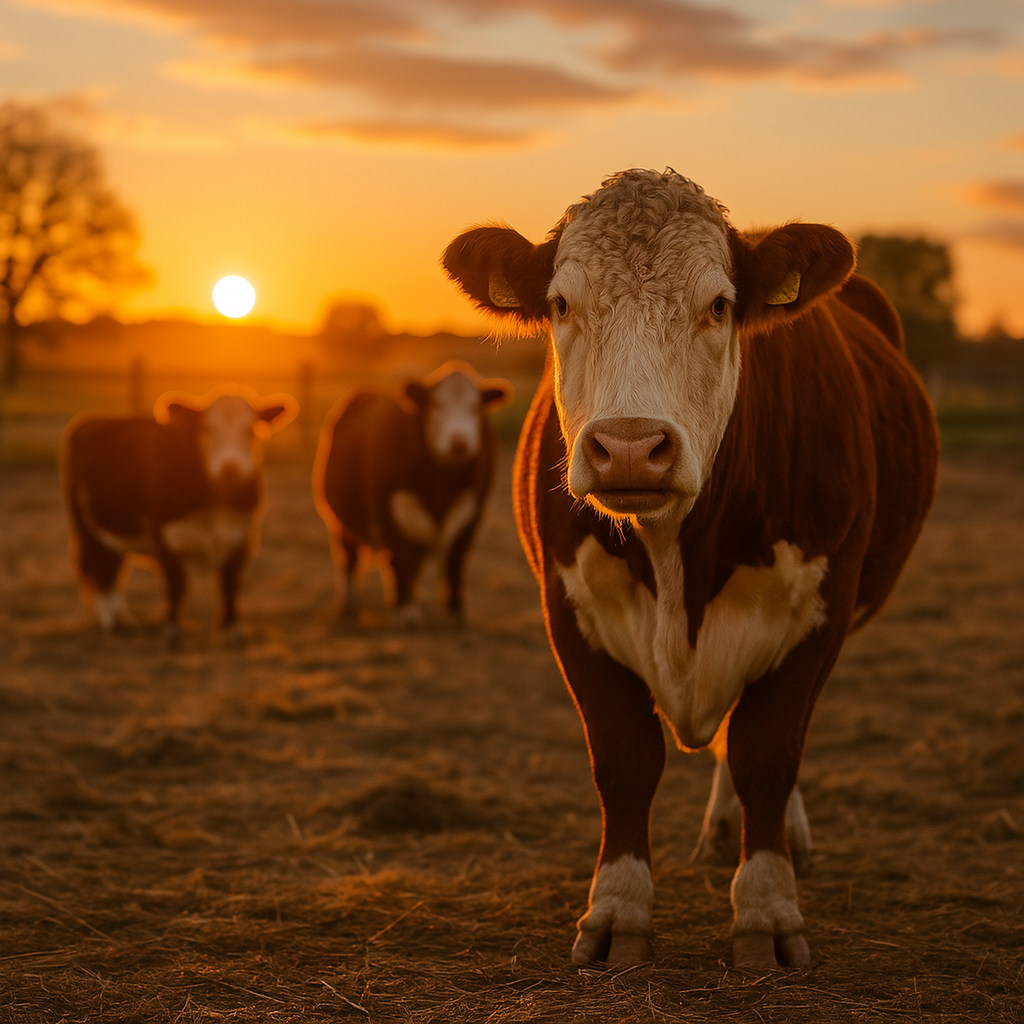
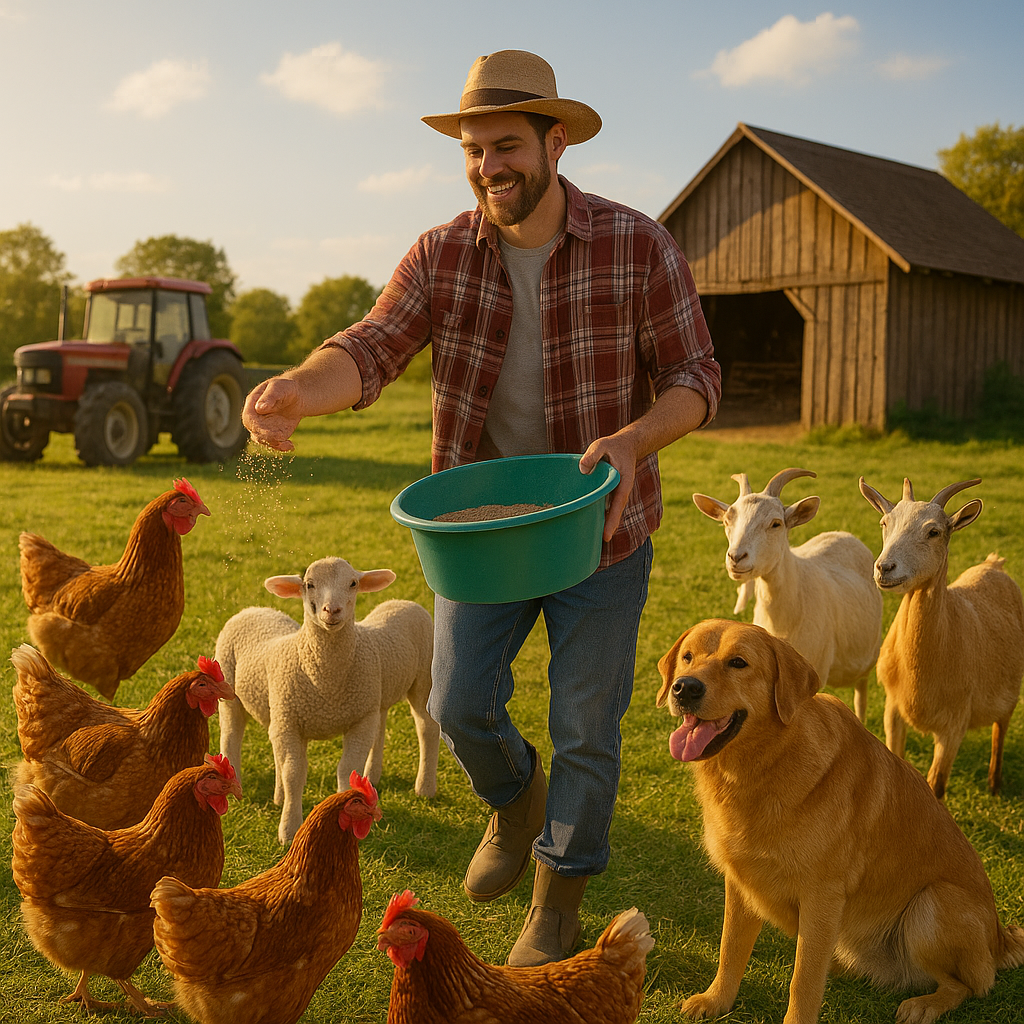
An animal that is stressed, crowded or badly fed does not produce good meat, and it does not meet the standard we work to. Our lambs and cattle graze outdoors near Rakovník, with space, clean water and natural feed. No rushed fattening in the last weeks before slaughter.
It continues in our own abattoir
This is the part most farms outsource, and it is the part we deliberately kept. Because the abattoir is ours, we control the handling — short transport, calm conditions, no long waits. The slaughter itself is carried out according to halal practice, with a single clean cut and full drainage of blood.
Why we can tell you all of this
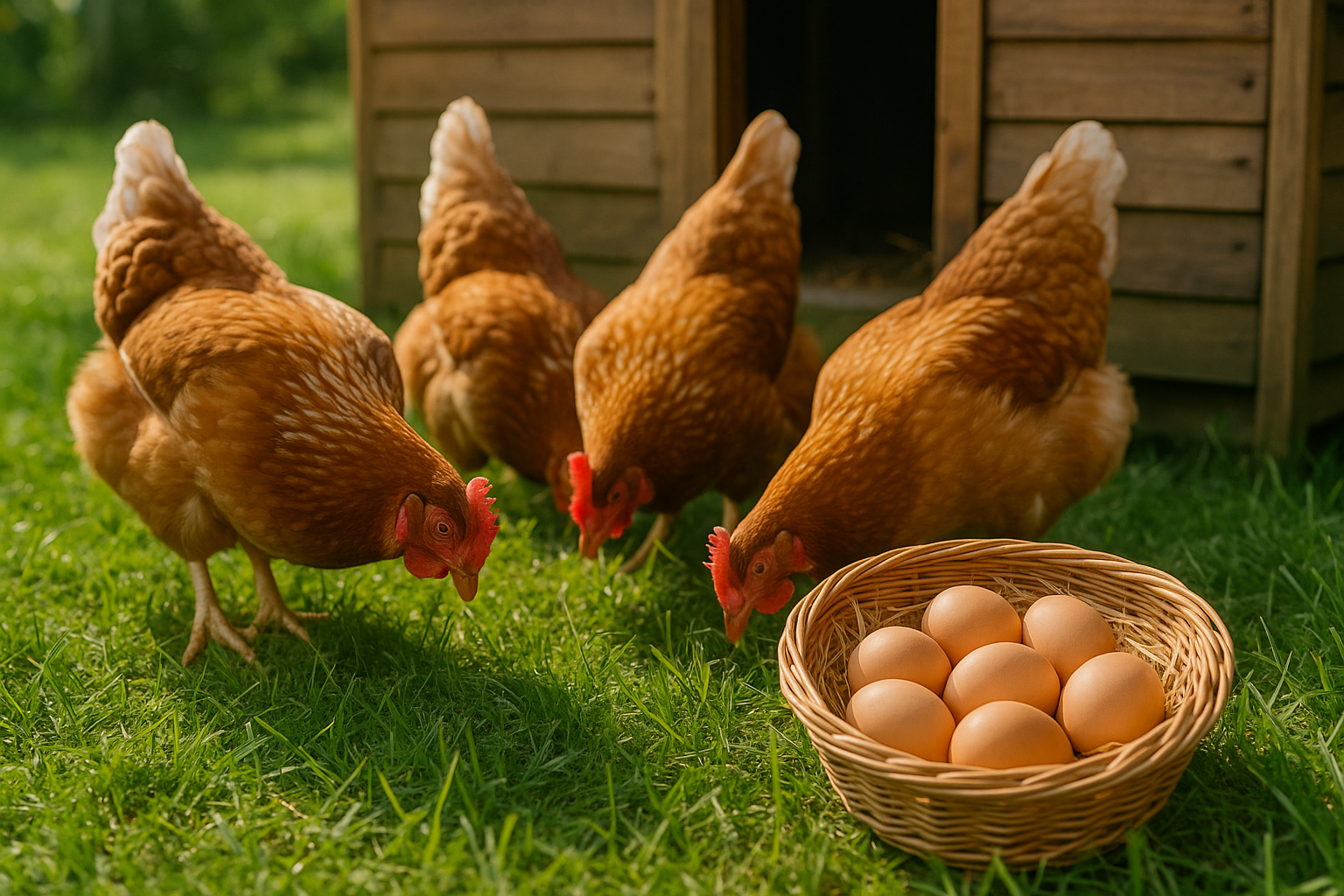
Farm, abattoir, butcher shop and restaurant kitchen belong to the same company. There is no middleman, no anonymous wholesaler, no batch of meat arriving from somewhere else. When you ask where a cut came from, the answer is one field and one date, and we can give it to you.
What it does not mean
It does not mean the meat is only for Muslim customers. Most of what leaves our counter goes to people who simply want to know how the animal lived. Halal, done properly, is an animal-welfare standard as much as a religious one — and the two point in the same direction.
Where to get it
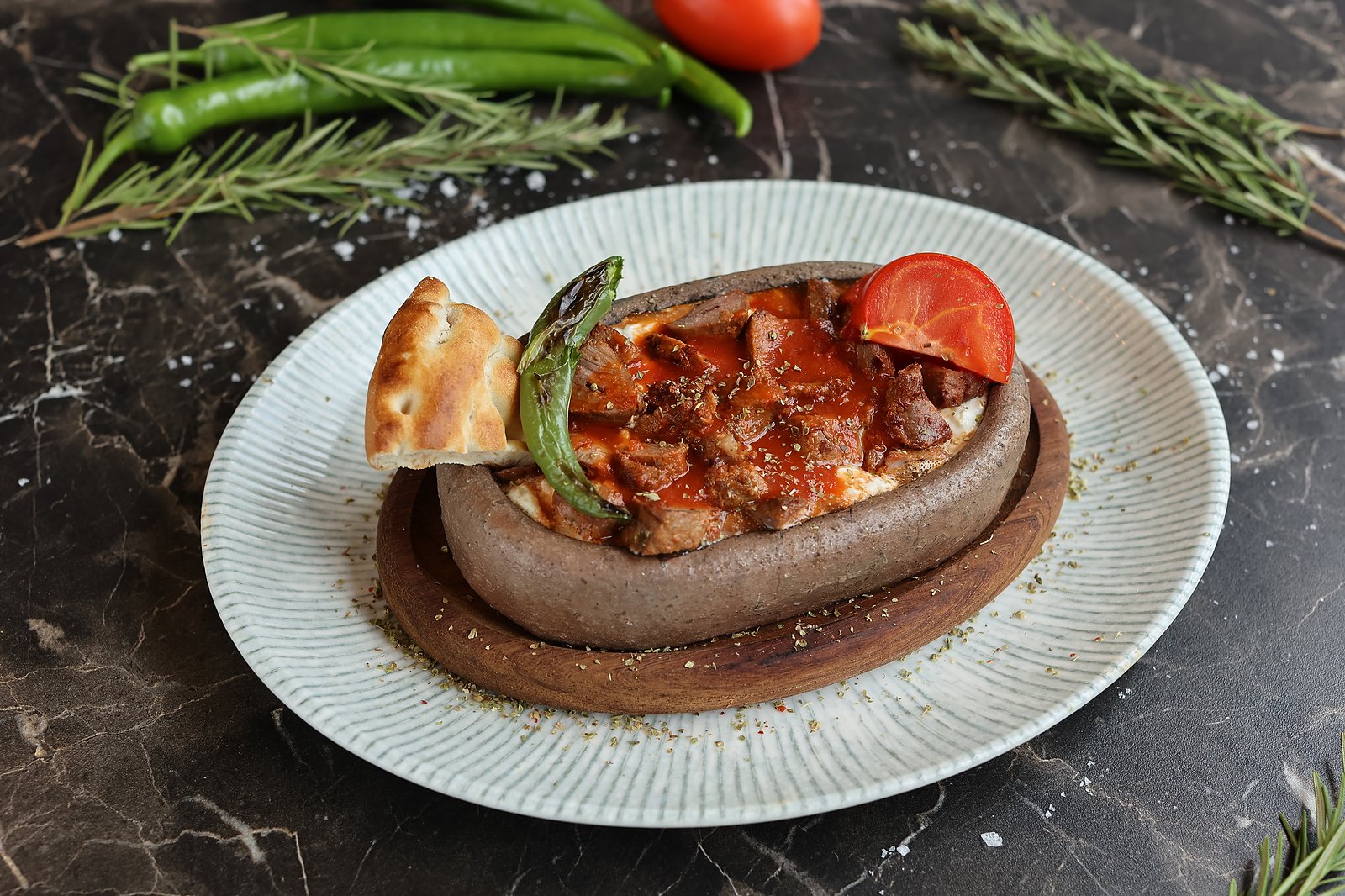
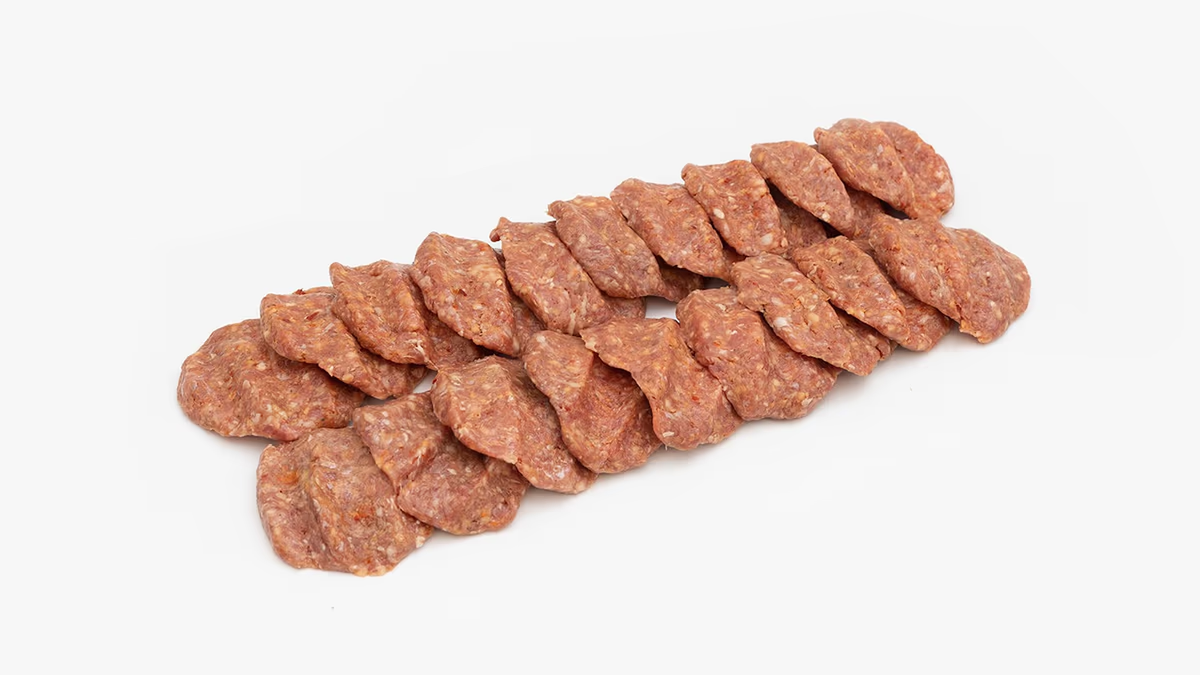
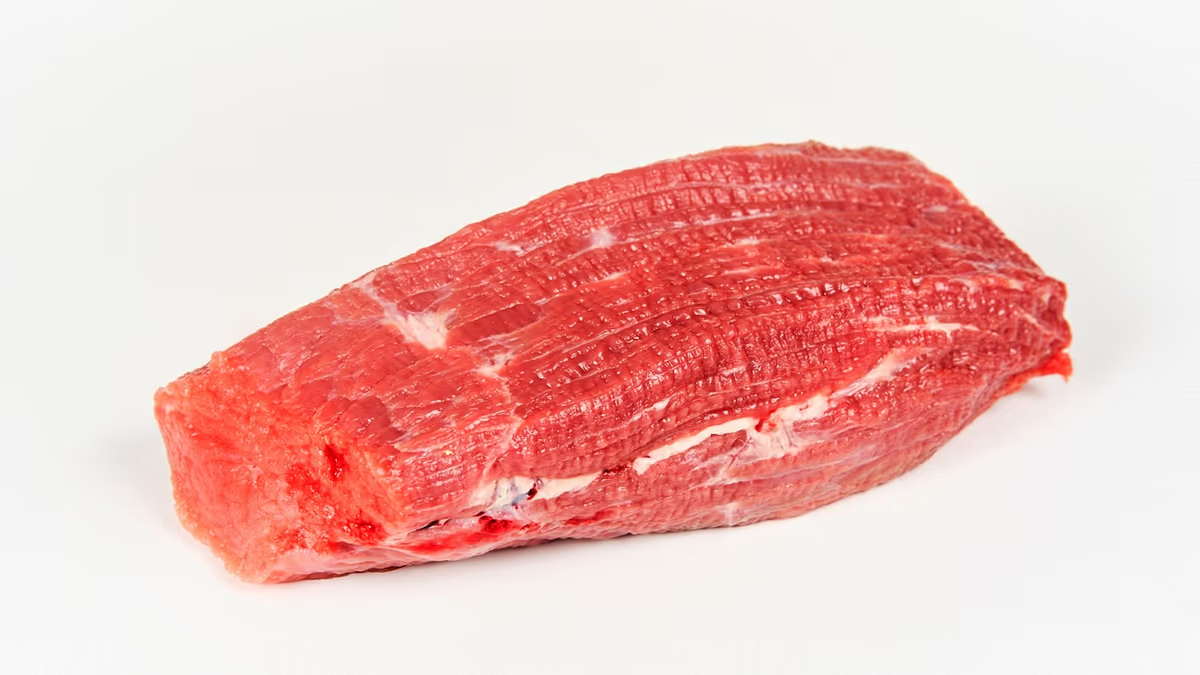
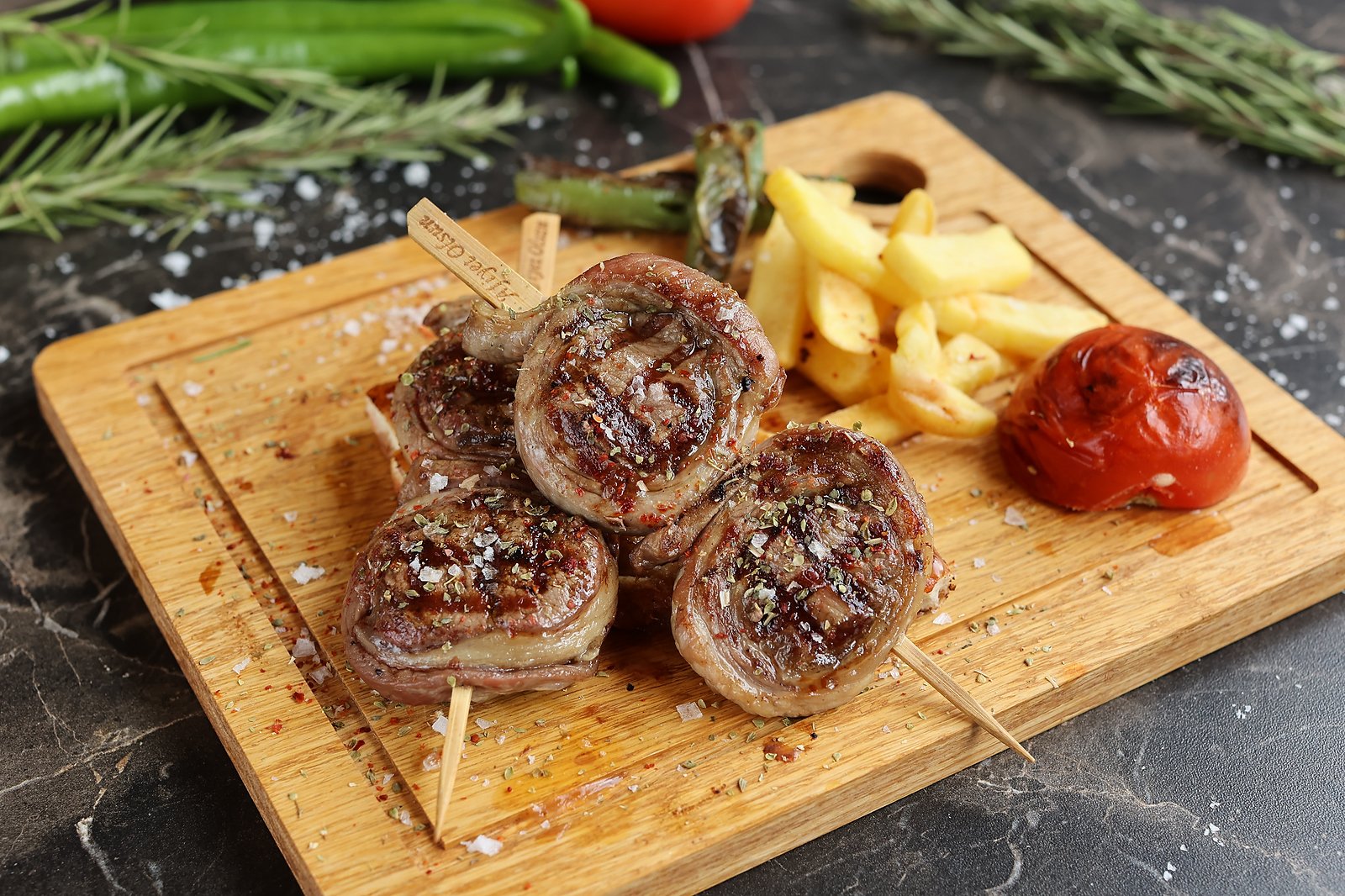
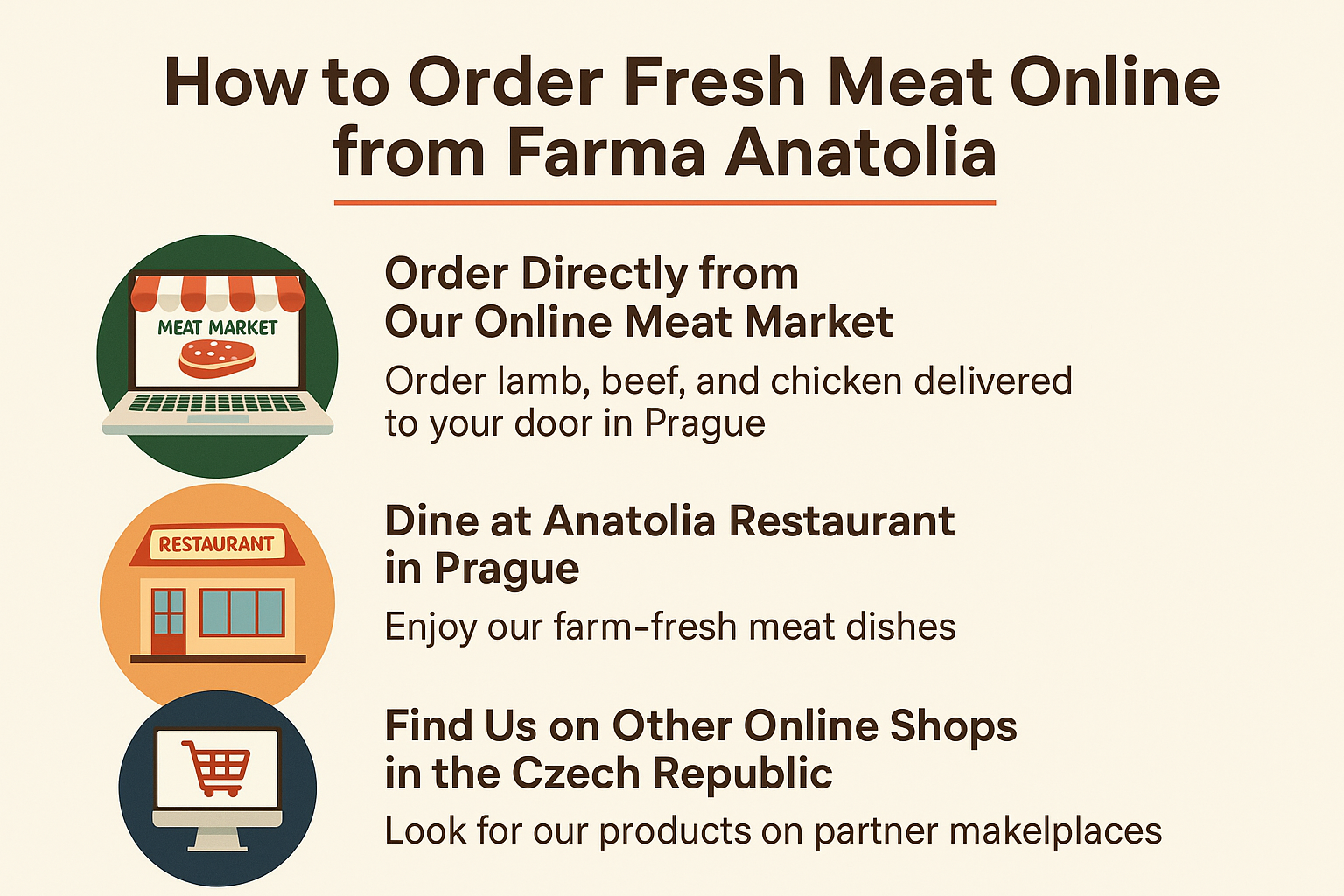
All of it comes from our own farm near Rakovník and our own abattoir. You can buy it over the counter at Anatolia Meat Market, Na Poříčí 1933/36, Prague 1 (every day 09:00–21:00), order it online, or eat it cooked over charcoal next door at Anatolia Grill Restaurant.