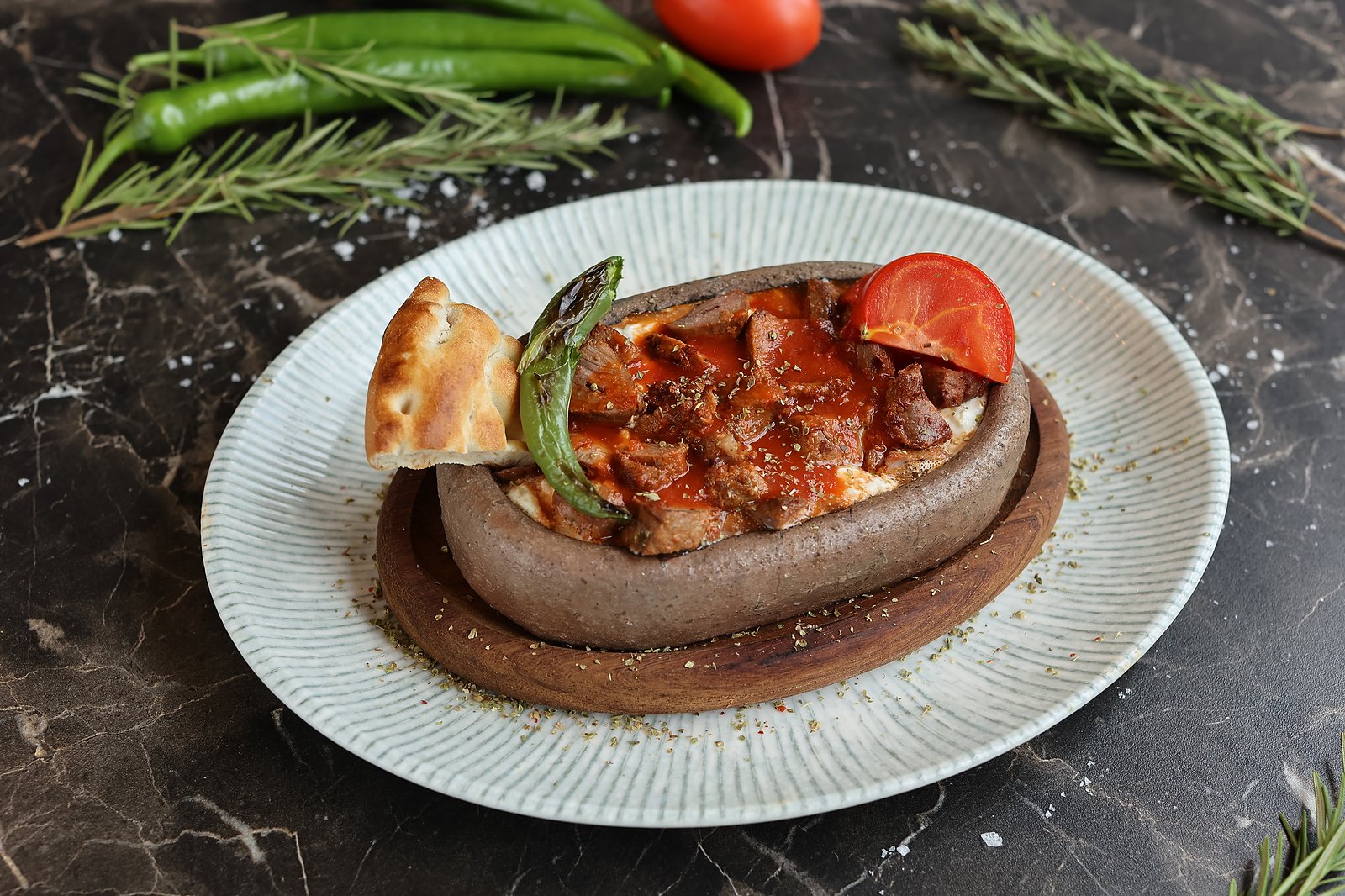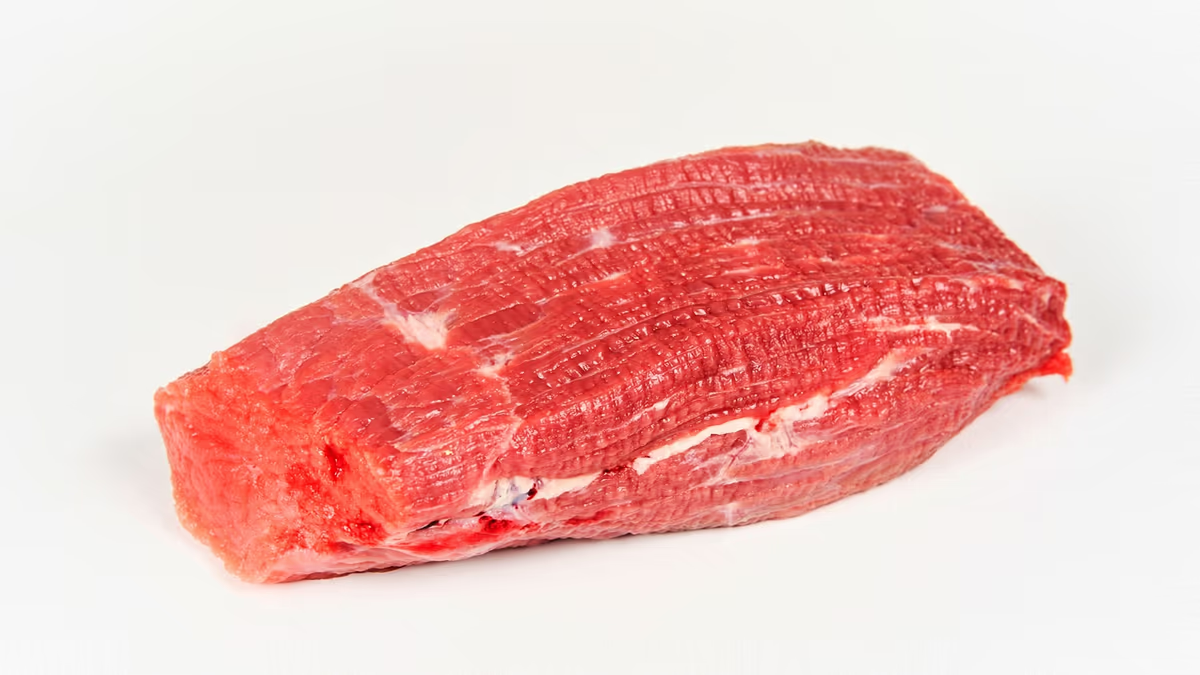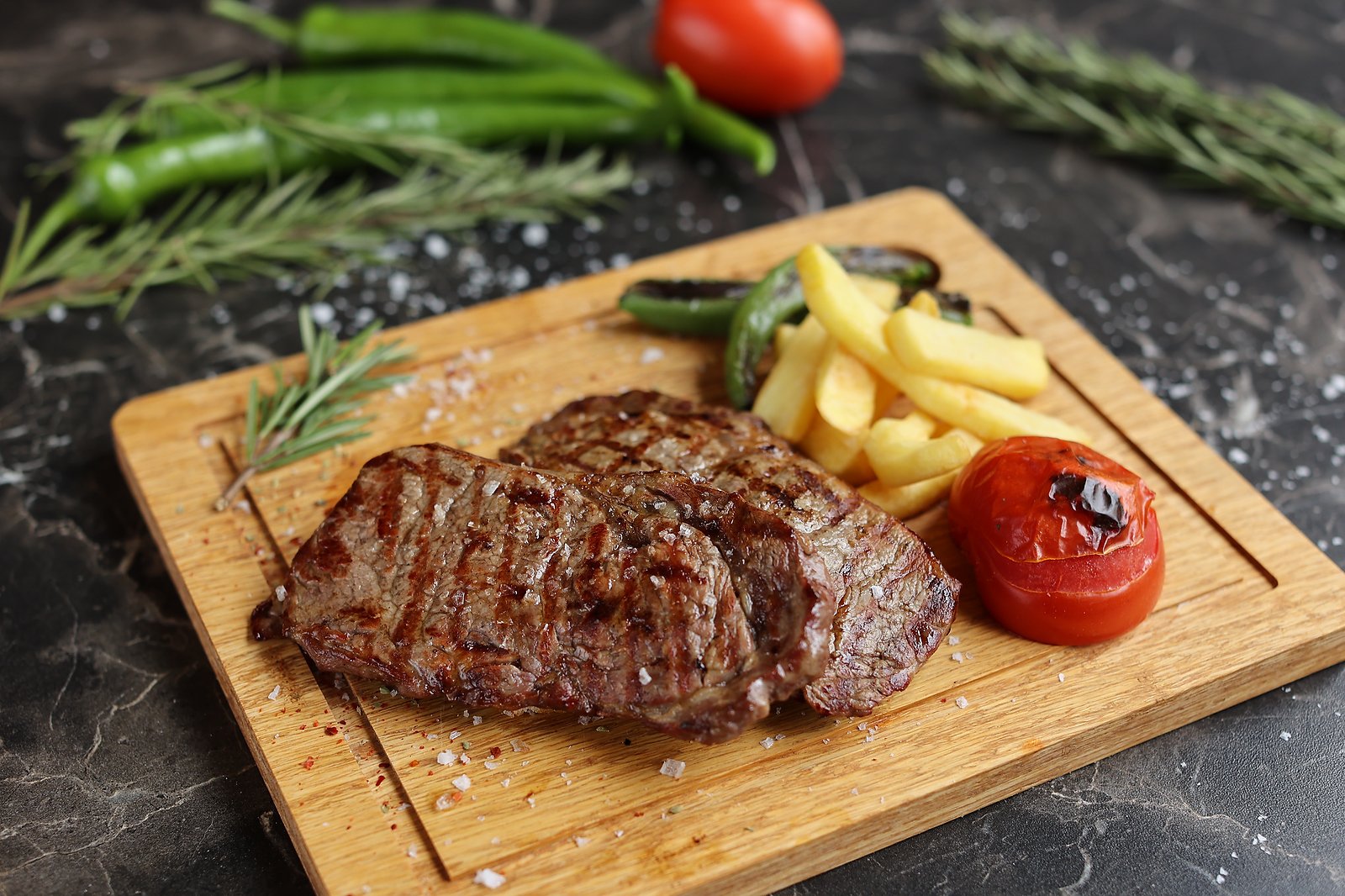
Gas is easier. It lights in seconds, holds a temperature and cleans up fast. We still burn wood charcoal in the restaurant every service, and it is not nostalgia.
Radiant heat behaves differently
Charcoal cooks mostly by radiation from a glowing bed, not by hot air. Radiant heat hits the surface of the meat hard while the inside stays behind, which is exactly what you want for a crust with a pink centre. Gas heats the air around the meat, so the outside and inside move closer together.
Dripping fat is part of the recipe
When lamb fat hits hot coals it vaporises and comes straight back up into the meat. That is the smell people recognise from twenty metres away, and it is why a lamb chop over charcoal tastes different from the same chop in a pan. Trim the fat off and you throw away the flavour.
Heat you can read
A charcoal bed is never one temperature. You bank the coals to one side and you get a hot zone and a resting zone in the same grill — sear over the coals, finish beside them. Once you cook this way, a single flat temperature feels like a limitation.
Three things that matter more than the fuel
- Meat at room temperature. Straight from the fridge means a cold centre and an overcooked edge. Twenty minutes out.
- Wait for grey coals. Flames scorch. You want an even orange glow under grey ash.
- Rest it. Five minutes off the heat, loosely covered. The juice redistributes instead of running onto the board.
Where to get it
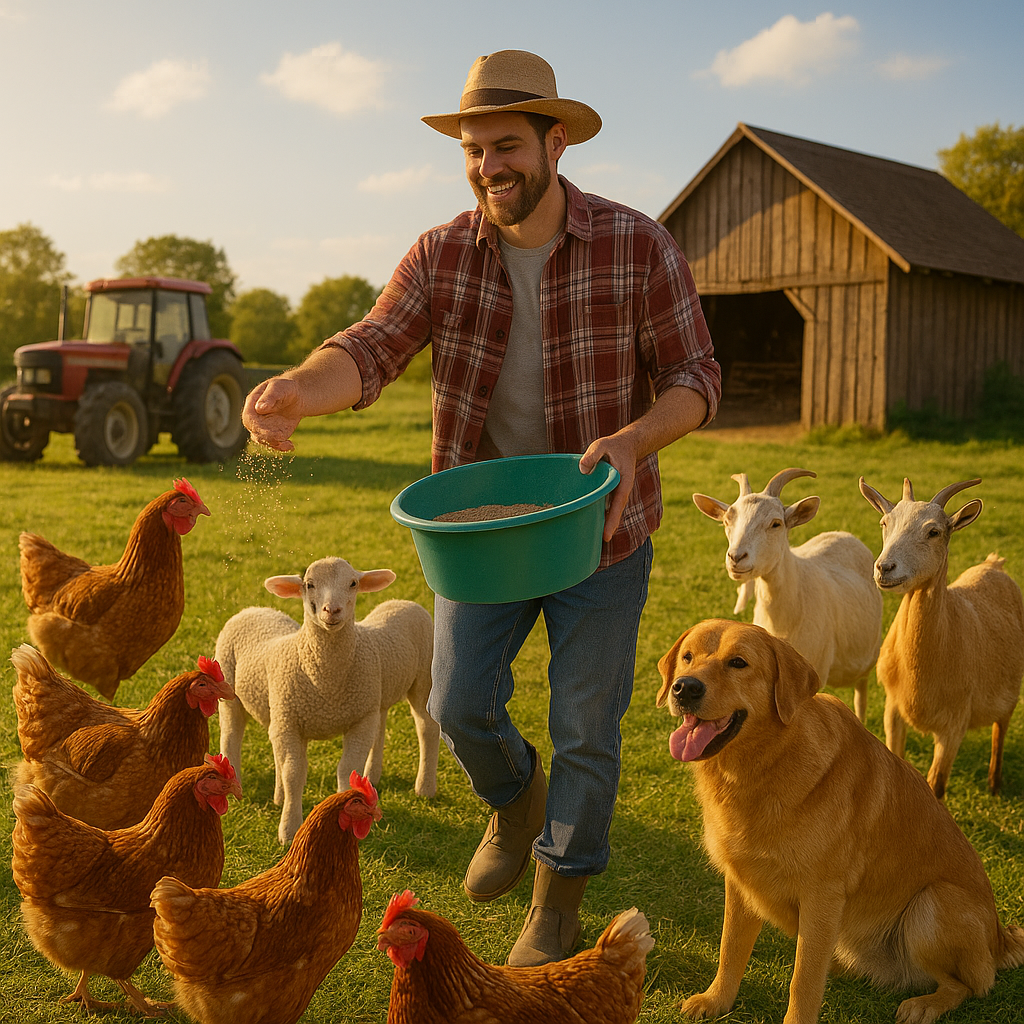
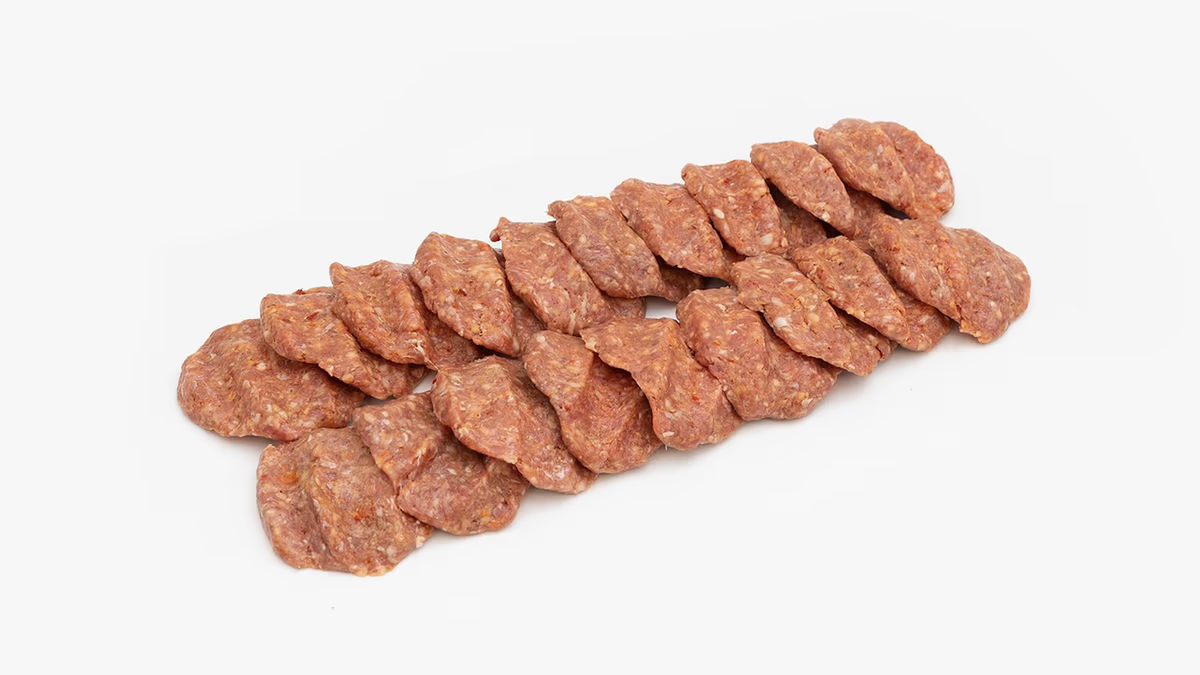
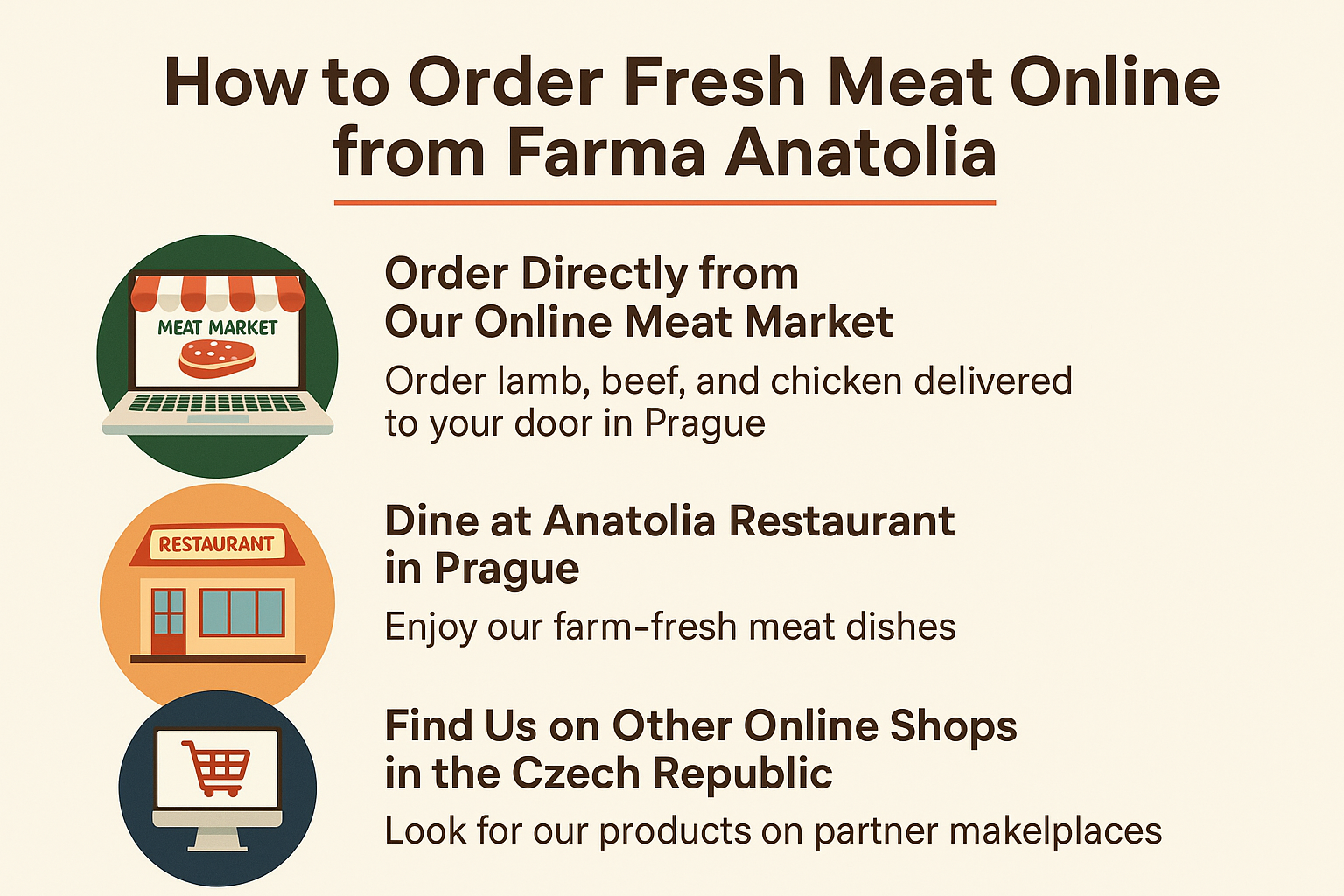
All of it comes from our own farm near Rakovník and our own abattoir. You can buy it over the counter at Anatolia Meat Market, Na Poříčí 1933/36, Prague 1 (every day 09:00–21:00), order it online, or eat it cooked over charcoal next door at Anatolia Grill Restaurant.